Who was San Gennaro
The bishop and the martyrdom
Gennaro was Bishop of Benevento and died during Diocletian's persecutions in the early 4th century. He was beheaded in Pozzuoli, at the Solfatara, a place those familiar with the Campi Flegrei recognise by its smell before its landscape. He was not born Neapolitan: he became one by adoption, and definitively so.
How he becomes Naples' saint
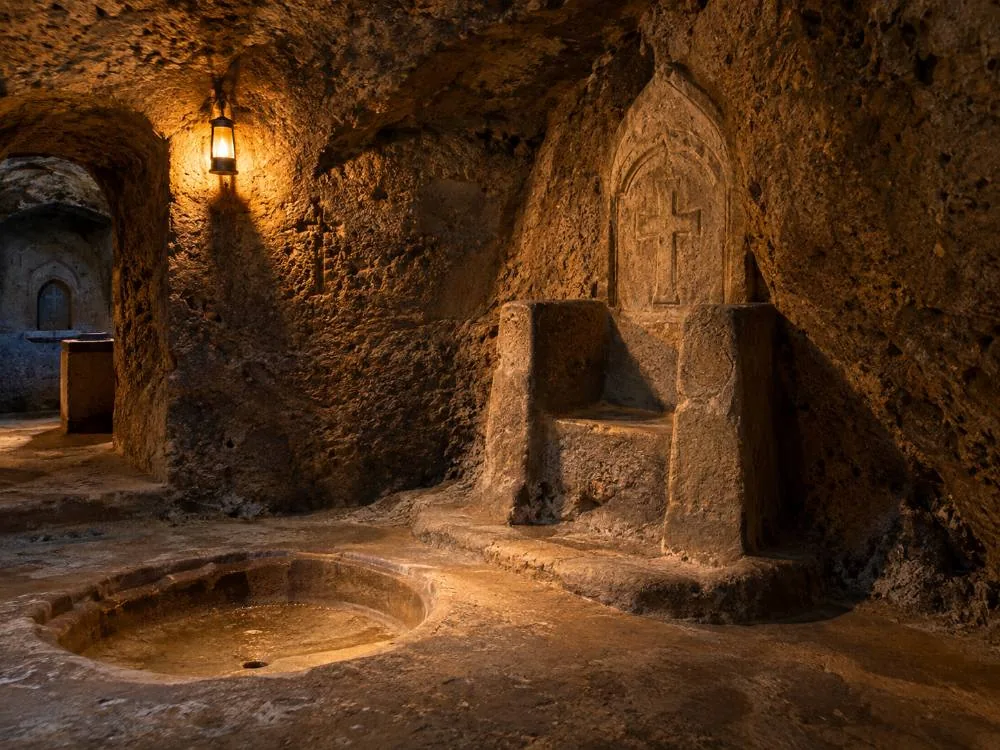
The decisive moment comes in the 5th century, when his body is translated to the Catacombs of Capodimonte. From that moment, the Christian cemetery transforms into the city's great sanctuary, and the ascent to Capodimonte becomes a pilgrimage route. The full history of the complex is in the history of the catacombs, and what you walk through today in what you see underground.
"Faccia gialla"
The popular Neapolitan nickname comes from the color of the reliquary bust. When said by a Neapolitan, it is not irreverence: it is how people in this city speak to their household saints, with a familiarity that sounds strange to outsiders. Those who hear it for the first time at the market usually think it is an insult and are mistaken.
The original tomb was in the catacombs; the vials with the blood are in the Duomo, in the Chapel of the Treasury of San Gennaro. Two places, two different things: the detail in the miracle of the blood.
The city’s three dates
The liquefaction of the blood traditionally occurs three times a year: the Saturday before the first Sunday in May, September 19th, which is the saint’s day, and December 16th. These are the dates when Naples truly comes to a standstill, and on September 19th, you can feel it even in the neighborhood beneath the catacombs. If you are planning your trip, I take this into account in when to go.
The full story’s route
Those who want to connect the tomb and the Treasury can take the Sacred Mile: a three-hour walk linking the burial site to its Treasury, crossing the Rione Sanità, with the catacombs and the Basilica of Santa Maria della Sanità included in the route.
Descending to where the body was taken
The original tomb was in these galleries, and the guided tour is the only way to see them. Available departures are listed below.
Frequently asked questions
How did San Gennaro die?
He was beheaded in Pozzuoli, at the Solfatara, during Diocletian’s persecutions in the early 4th century. He was the Bishop of Benevento. The connection with Naples came later, as I explain in the history of the catacombs.
Why is San Gennaro called *faccia gialla*?
Because of the color of the reliquary bust: it’s a popular Neapolitan nickname, affectionate and not irreverent.
Is San Gennaro’s body in the catacombs?
The original tomb was there: the body was transferred to the catacombs in the 5th century. The vials with the blood are kept in the Duomo, as I explain in the miracle of the blood.
When is San Gennaro celebrated?
September 19th is the saint’s day; the other two traditional dates are the Saturday before the first Sunday in May and December 16th. For what this means for a visit, see when to go.