The Rione Sanità: the neighborhood beneath the catacombs

Why the district originated where it did
Burials took place outside the walls: this was the rule for Greek and Roman cities, and the Sanità is the valley that filled with that tradition. First the burials, much later the houses. That is why the underground here is older than the surface, and why walking down the street means passing over twenty-five-century-old burial chambers without realising it.
The staircases everyone photographs
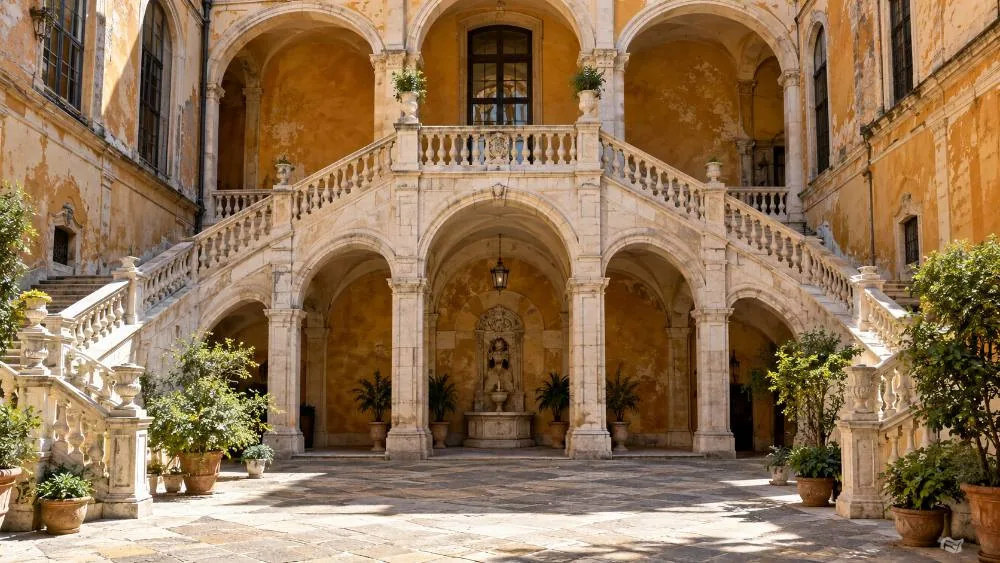
Between the sixteenth and seventeenth centuries, the valley became an area for noble villas, and the Palazzo dello Spagnuolo and Palazzo San Felice remain, with their open staircases known in Naples as "falcon-wing style": visible ramps overlooking the courtyard, designed to be admired from below. They can be seen from the street, and this is the stop where everyone pauses to take photographs.
What lies beneath
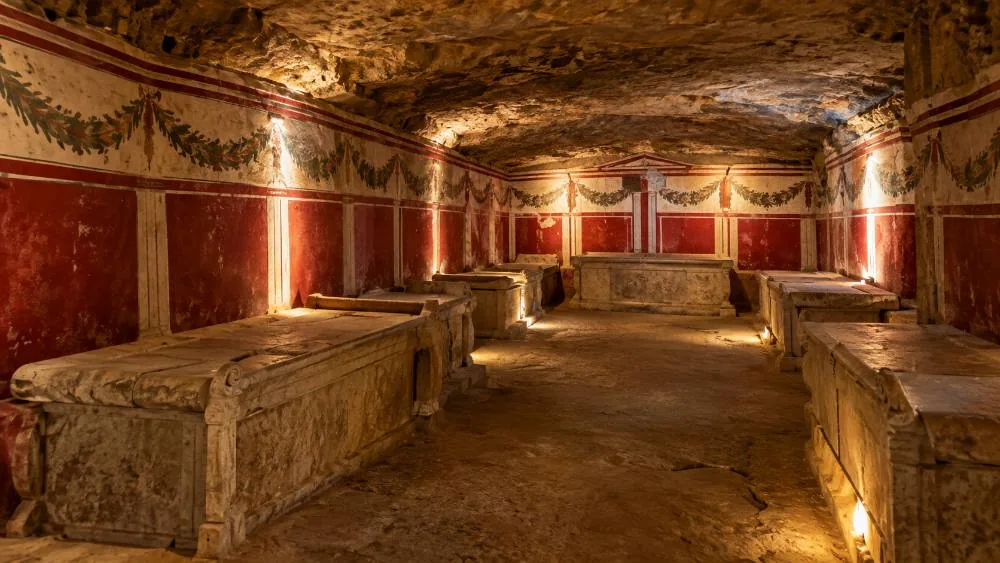
Three things, and it is worth keeping them distinct. The Catacombs of San Gaudioso are located at Via della Sanità 123, beneath the Basilica of Santa Maria della Sanità, and preserve fifth–sixth century frescoes and mosaics alongside seventeenth-century noble burials with walled-in skulls. The Ipogeo dei Cristallini, on Via dei Cristallini, consists of four Greek burial chambers from the fourth century BC, twelve metres below street level. The Catacombs of San Gennaro are just above, at the base of the Capodimonte slope. For those unsure which to choose, the comparison can be found in which catacombs to visit in Naples.
The Sacred Mile
This is the itinerary connecting the tomb of San Gennaro to his Treasury by crossing the district: a three-hour walk, including fifty minutes of guided tours in the catacombs, forty minutes in the Basilica of Santa Maria della Sanità, then Palazzo San Felice, Via Vergini, Piazzetta Crociferi, and ending at Piazza Cavour. It has the highest rating of the six tours I compare, 4.9. The dedicated page is the Sacred Mile.
The catacombs ticket is not just any ticket: it is managed by the social cooperative La Paranza, founded in this district, and the reopening of the underground has transformed its economy. Booking the guided tour is the most direct way to leave something here rather than elsewhere.
A district that was long distant
The Sanità remained isolated from the rest of Naples for decades, with a difficult reputation that Neapolitans themselves rarely spoke of and often dismissed. What put it back on the map was not a top-down plan: it was the young people of La Paranza who reopened the catacombs and built a livelihood around them. I was born here, and the difference between the district then and now is measured by the number of people I see walking up Via dei Vergini with a ticket in hand.
Explore the neighbourhood with someone who knows it
There are two different formats. The three-hour route crosses the district above ground to Piazza Cavour; the two-hour underground walk, available only in Italian, takes in Palazzo dello Spagnuolo, the Ipogeo dei Cristallini and the Catacombs of San Gaudioso. There are no reviews yet published on GetYourGuide for the second option: it is a new itinerary, not a rejected one. You can find the verdict on the format in the review of the walk through the Rione Sanità, and the options with small groups in small-group visits.
 Highest rating
The Sacred Mile: 3-hour guided tour
 Three sites in one
Rione Sanità: underground walk
 Maximum 10 people
Ipogeo dei Cristallini: guided tour
Walk through the neighbourhood
The Sacred Mile is the most comprehensive way to see the Sanità district: three hours, from the saint’s tomb to his Treasure. Available departures are listed below.
Dates not working for you?
Check the other available tours of the Catacombs of San Gennaro and find the slot you need — instant confirmation and free cancellation.
Frequently asked questions
Why is the Rione Sanità famous?
For the underground and the open staircases of the 18th-century palaces. It began as a burial area outside the city walls, and beneath it lie the Catacombs of San Gaudioso and the Ipogeo dei Cristallini: the comparison is in which catacombs to visit.
Can the Rione Sanità be visited on foot?
Yes, and it’s the right way. The Sacred Mile route crosses it in three hours, connecting the tomb of San Gennaro to his Treasure.
What is the relationship between the neighborhood and the catacombs?
Direct access: the Catacombs of San Gennaro are managed by the social cooperative La Paranza, born here, and their reopening has transformed the district’s economy. How to reach them is detailed in how to get there.
What are the hawk-wing staircases?
The open staircases visible in the courtyard of Palazzo dello Spagnuolo and Palazzo San Felice, among the most recognizable features of the neighborhood. They are stops on the three-hour route.