In short
- About one hour underground. GetYourGuide lists 45–50 minutes for the time slot, the official site mentions one hour: the difference and its explanation lie in how long the tour lasts.
- Closed on Wednesdays. On other days, entry is from 10:00 to 17:00, with last admission at 17:00 and the ticket office open from 9:30 — all in hours and tickets.
- Two connected levels. Above the Bishops' Crypt and the mosaics, below the Basilica of Sant'Agrippino: the room-by-room details are in what you see underground.
- One ticket, two catacombs. Valid for 12 months and also includes San Gaudioso, at Via della Sanità 123; the comparison between the two is in San Gennaro or San Gaudioso.
- 4.6 out of 8,718 reviews. A solid rating, not perfect: recurring criticisms and why we agree are in the review of the visit.
What the ticket includes
One booking covers more than most visitors use. Here’s what’s included, what lasts twelve months, and what you should know before heading up.
In the guided tour
- Live guide, in Italian or English
- Admission ticket to the Catacombs of San Gennaro
- Scheduled hourly departure of 45–50 minutes
- Free cancellation up to 24 hours before
Plus, for twelve months
- Access to Catacombs of San Gaudioso, Via della Sanità 123
- Access to the Basilica of Santa Maria della Sanità, above San Gaudioso
- It also works the other way around: those who book San Gaudioso can then enter here
- A year to return, without buying anything again
Things to know before
- You don’t enter alone: the visit is guided only
- Arrive 15 minutes before the booked time slot
- The ticket is valid only for the purchased date and time
- Inside no photography allowed
The underground route, step by step
What you see, in the order you see it. The path is always the same; only the narrator changes.
A typical visit starts from the entrance vestibule, it runs through the upper level to the mosaics, descends to the lower level with the Basilica of Sant’Agrippino and goes back up toward the exit, above the Rione Sanità.
- The entrance and vestibule — The meeting point is at Via Capodimonte 13: show your booking and wait for the departure at the purchased time.
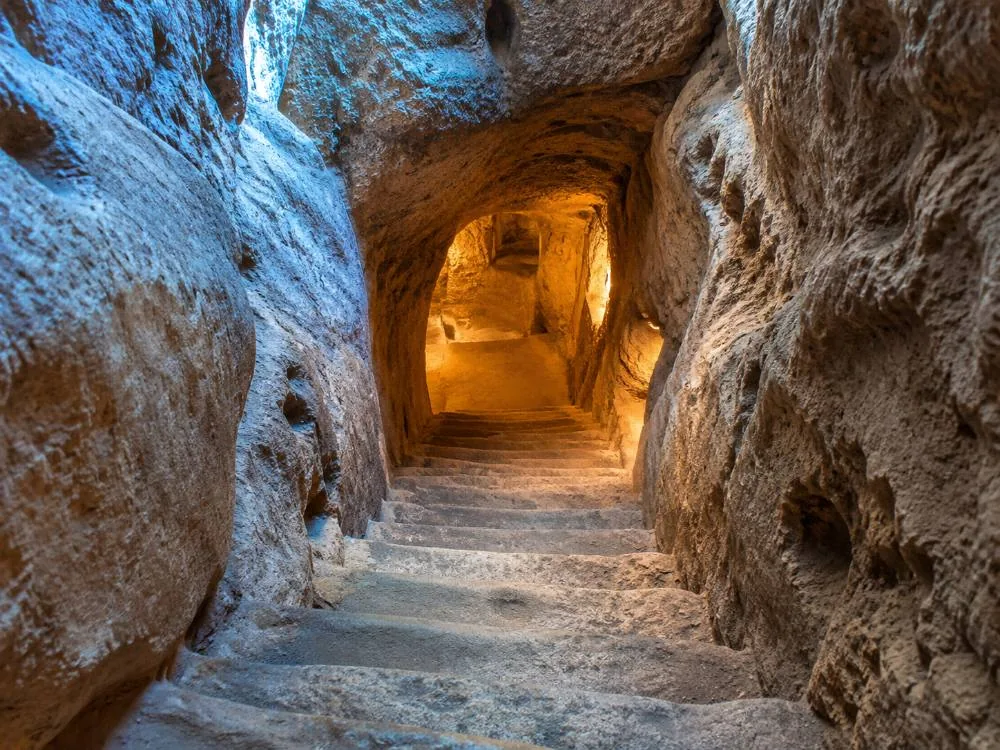
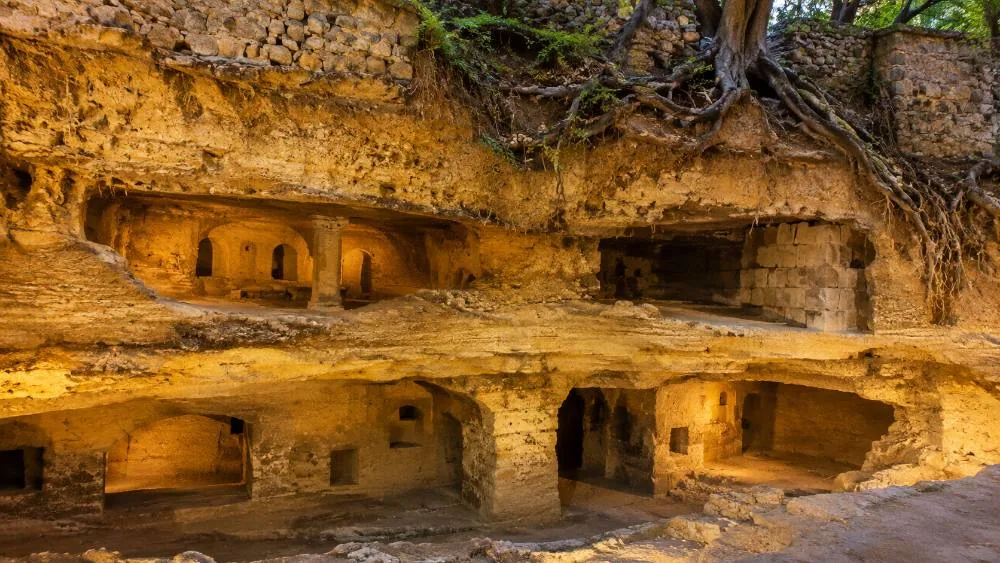
- The upper level — The complex has two connected levels, carved into the tuff: the visit starts from the upper one, the widest.
- The Crypt of the Bishops — Named after the bishops of Naples, it is the first long stop on the guided tour.
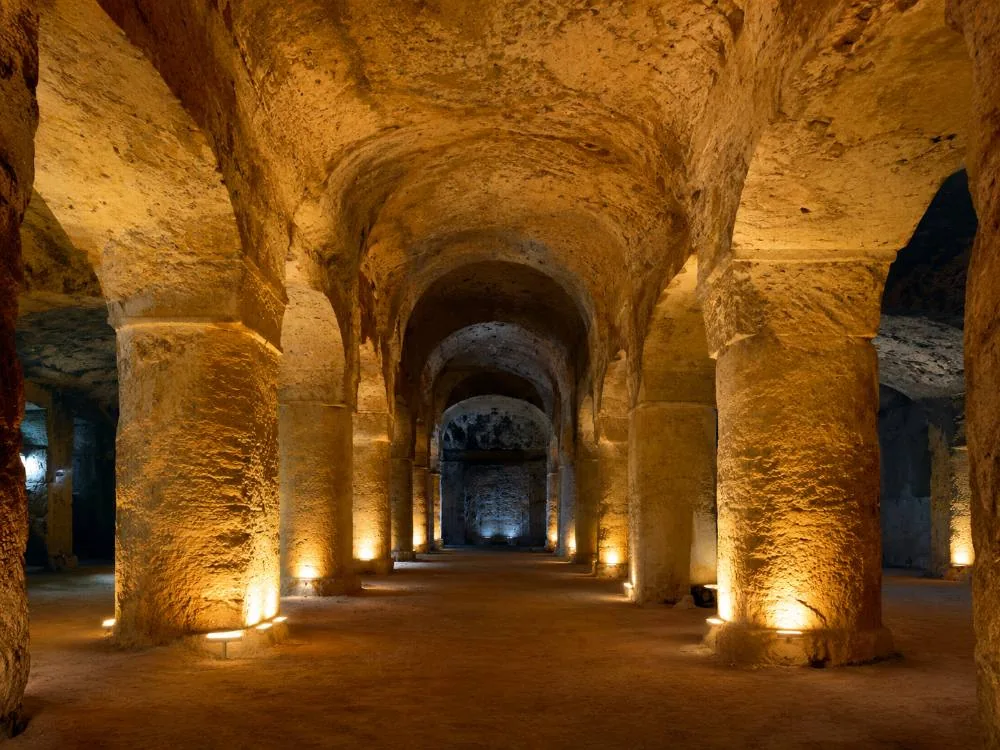
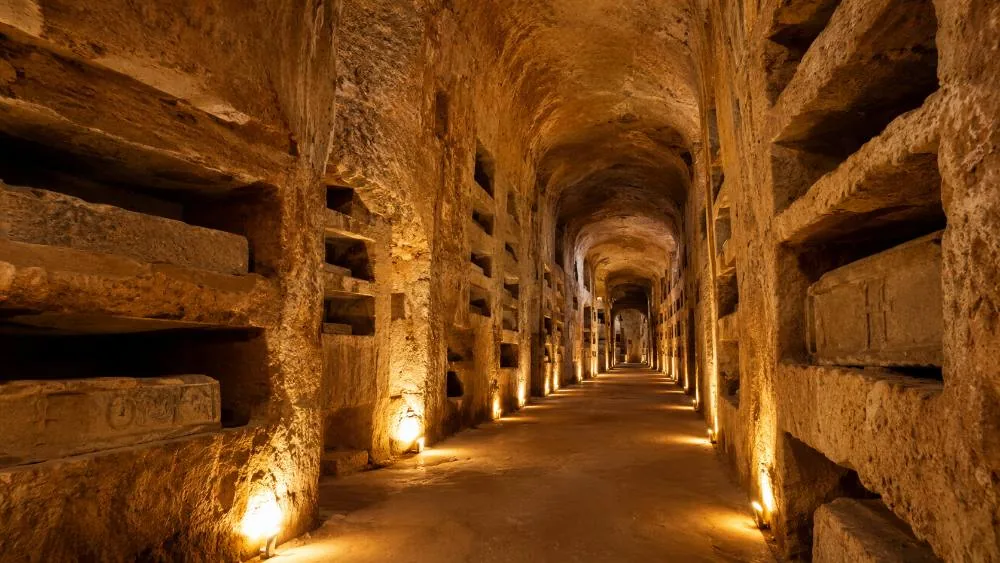
- The three-nave underground basilica — Three naves carved out of the rock, not built: this is where you realize how large the complex is.
- The mosaic of San Quodvultdeus — One of the mosaics on the upper level, and the one whose name is usually remembered.
- The Basilica of Sant’Agrippino — You descend to the lower level, where the basilica is entirely underground.
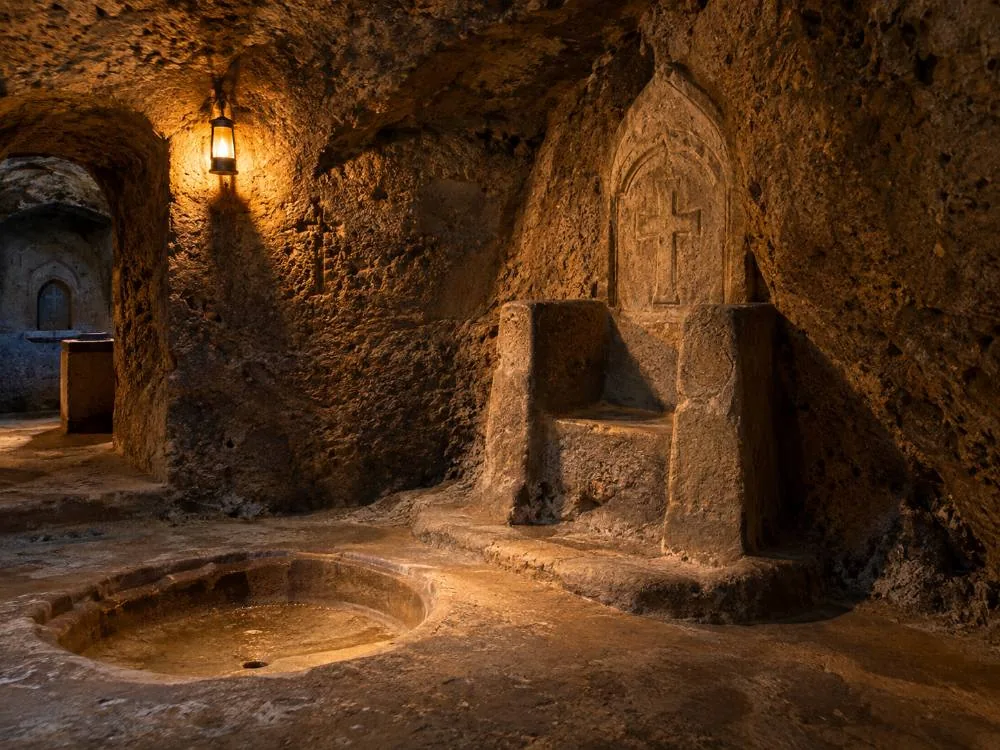
- The carved cathedra and baptismal font — A bishop’s cathedra carved out of the rock and a baptismal font: this is where ceremonies were held, not just burials.
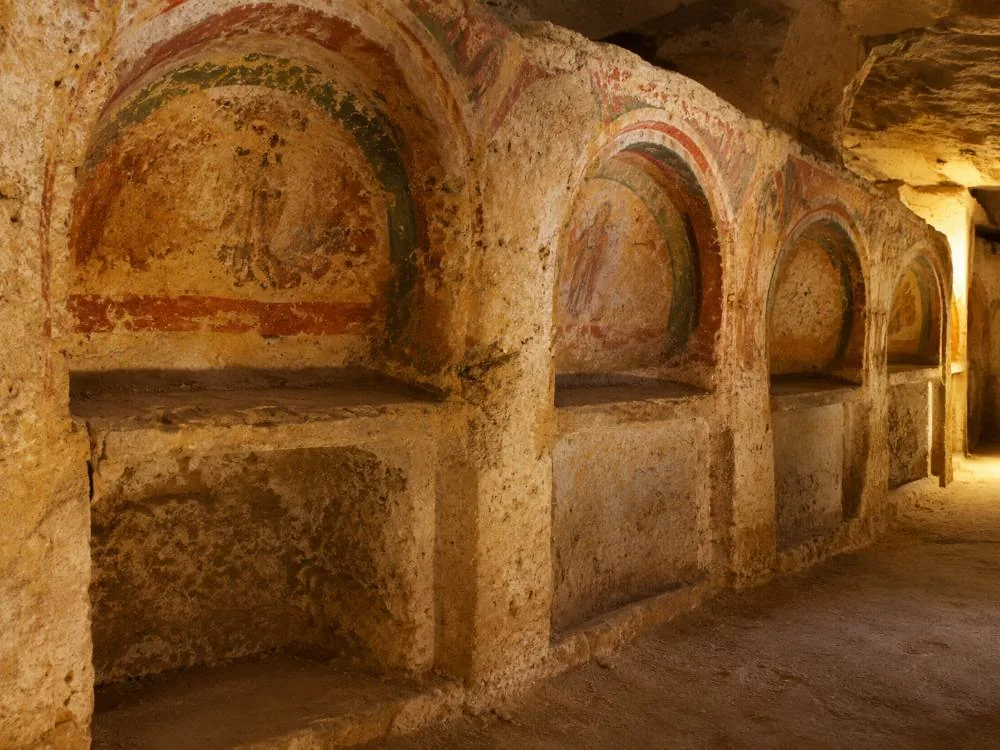
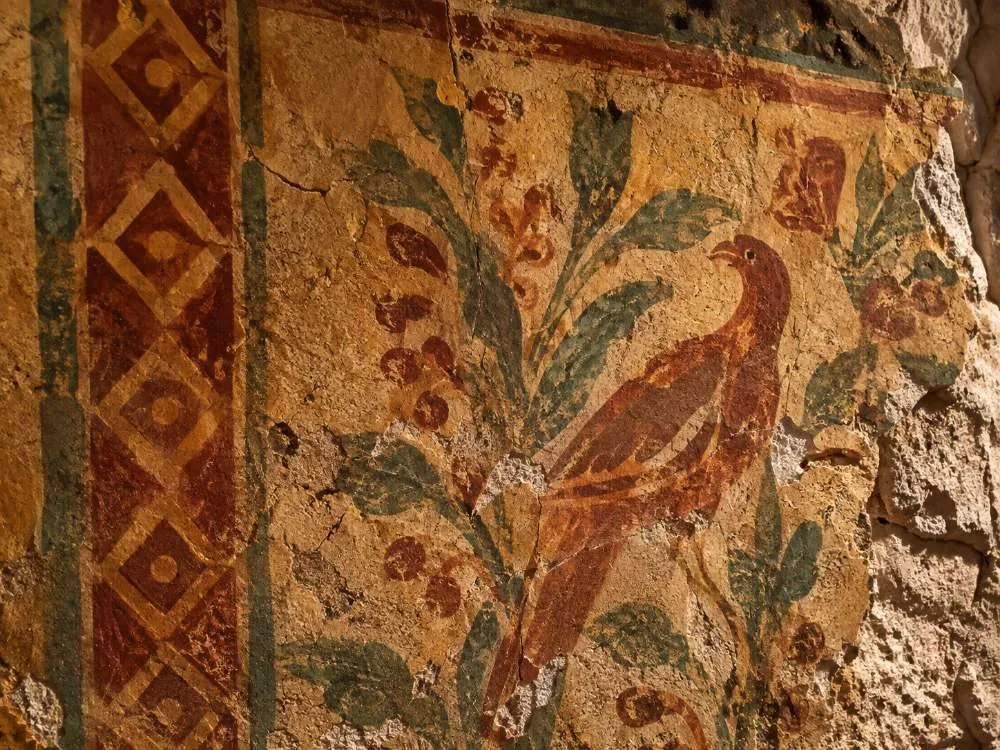
- The frescoes, from the 2nd to the 10th century — Different layers of paint in the same space, which is also why photography is not allowed inside.
- Exit towards the neighbourhood — Returning to the surface above the Rione Sanità, with the second catacomb already included in the ticket just used.
The covered route measures approximately half a kilometre and is mostly flat; underground it is cooler than on the street, in any season. The room-by-room details are in what you see underground, the entry conditions in Accessibility.
How to book, in practice
Choose the format
The catacomb alone, the second catacomb, or the three-hour walking tour of the Sacred Mile.
Choose date and time
Departures are hourly and the ticket is valid only for the purchased date and time.
Book before you leave
Booking is mandatory: showing up at the gate and hoping for the best does not work.
Arrive 15 minutes early
Those arriving after the departure time will not be moved to the next slot.
Available slots, day by day
The box below shows the free departures and updated conditions directly from GetYourGuide. No slots appear on Wednesday: the site is closed.
San Gaudioso, San Gennaro or the Sacred Mile?
Three ways to go underground in the Sanità district. The first two catacombs go hand in hand: any ticket for one also grants access to the other for twelve months.
| Catacombs of San Gaudioso: guided tour | Recommended choiceCatacombs of San Gennaro: ticket and guided tour | The Sacred Mile: 3-hour guided tour | |
|---|---|---|---|
| Duration | 45 minutes | 45–50 minutes | 3 hours |
| What you'll see | 5th–6th century frescoes and mosaics, 17th-century noble burials with embedded skulls, works by Giovanni Balducci | Two levels carved into the tuff: Crypt of the Bishops, three-nave basilica, mosaics, Basilica of Sant’Agrippino | Catacombs of San Gennaro, Basilica of Santa Maria della Sanità, Palazzo San Felice, Via Vergini, Piazzetta Crociferi |
| Group | More intimate, according to reviews | Larger during peak times | Three-hour walking group, from the catacombs to Piazza Cavour |
| Languages | Italian and English | Italian and English | Italian and English |
| Who it's for | For those who have already seen San Gennaro, or want the embedded skulls and fewer people around | For those with a morning and wanting the main catacomb, with the second included | For those with half a day and wanting to understand the neighborhood, not just the underground |
| View → | Book this → | View → |
Photo gallery
Beneath La Sanità, in photographs
The galleries, the neighborhood above, and the stops along the Miglio Sacro. Photography is not permitted inside the site.
The six tours we compare
The two catacombs of La Sanità, the three-hour tour, the Greek necropolis, the underground walk through the neighborhood, and the historic center’s aqueduct. All six, with real ratings and reviews, in all tours.
 Most booked
Catacombs of San Gennaro: ticket and guided tour
 The second catacomb
Catacombs of San Gaudioso: guided tour
 Highest rating
The Sacred Mile: 3-hour guided tour
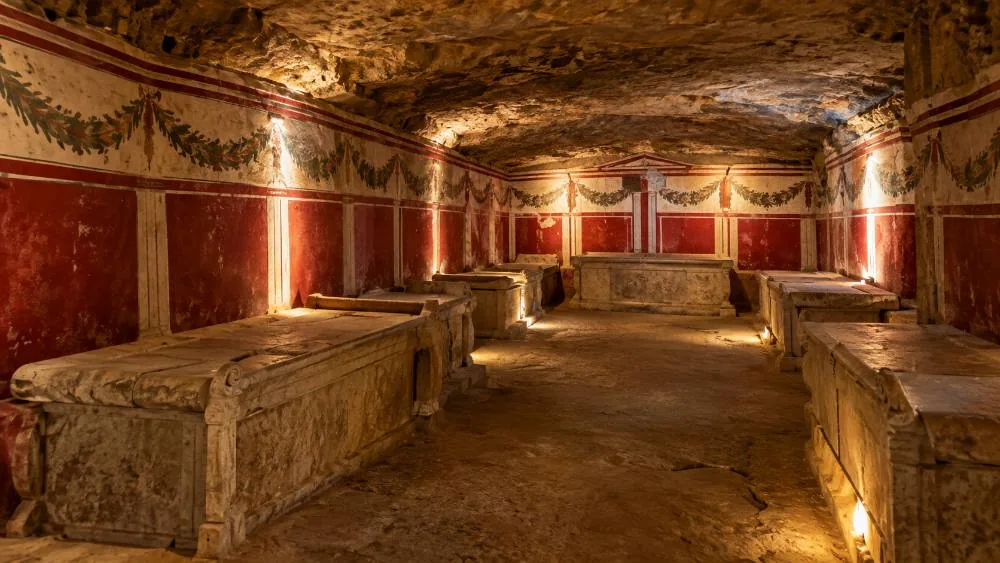 Maximum 10 people
Ipogeo dei Cristallini: guided tour
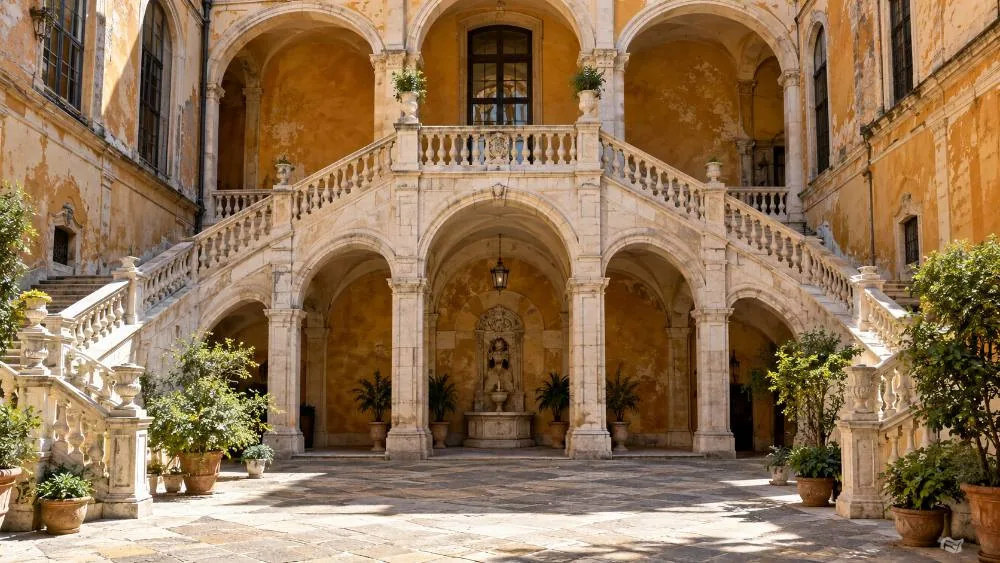 Three sites in one
Rione Sanità: underground walk
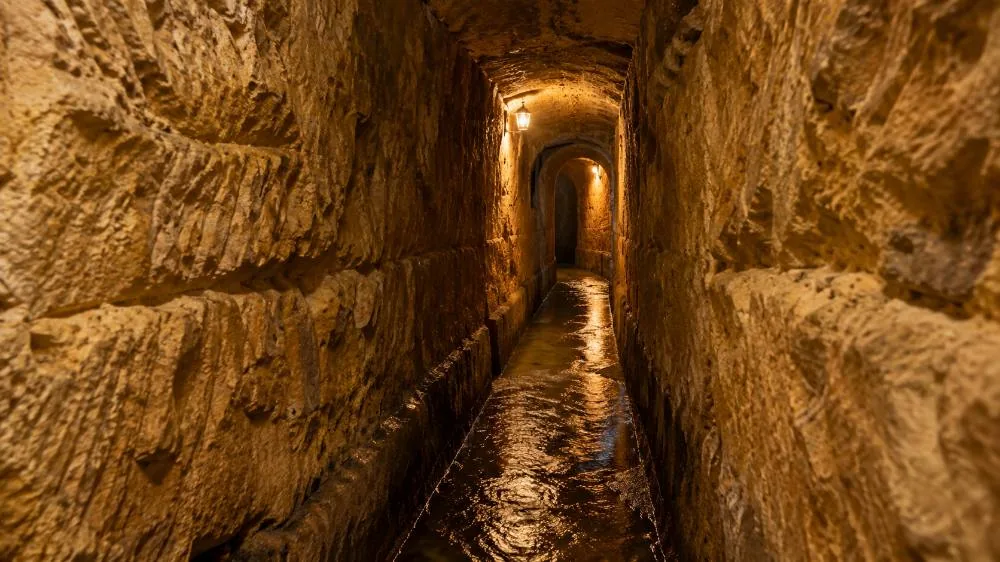 The classic in the city centre
Underground Naples: ticket and guided tour
What those who went below say
Four reviews published on GetYourGuide by those who booked the guided tour of the Catacombs of San Gennaro.
The historical account stuck with me, and the guide knew what they were talking about.
Our guide, Giuseppe, was knowledgeable and kept the group together from start to finish.
Worth seeing. So much history down there.
It’s cooler underground than on the street, which is a bonus in summer.
Ratings and reviews are updated GetYourGuide data from operators. Read our full reviews ›
Four questions everyone asks at the ticket desk
The questions I hear most often while the group waits for departure, with the short answer.
How long does it really last?
GetYourGuide lists 45–50 minutes for the slot, the official website mentions one hour: plan to spend roughly one hour underground between entry and exit. The full breakdown is in how long the tour lasts.
Can I enter without a guide?
No, and it’s not just a formality: departures are hourly and there’s no open entry. The reason, and how guided formats vary, are in guided tours.
What should I wear?
Closed shoes and an extra layer: underground, the temperature is cooler than on the surface all year round, even in August. Details in what to wear.
Is it suitable for children?
The galleries are wide and flat, which helps; other routes in the neighbourhood have a minimum age requirement. The thresholds for each visit are in visiting with children.
Is the blood of San Gennaro here?
No: the vials are kept in Naples Cathedral, in the Chapel of the Treasure. This was the tomb. The three dates and the debate are in the miracle of the blood.
Dates not working for you?
Check the other available tours of the Catacombs of San Gennaro and find the slot you need — instant confirmation and free cancellation.
The Catacombs of San Gennaro, Explained
I grew up just steps from Via dei Vergini, and for years I guided visitors up and down the Sacred Mile. The question I hear most often isn’t about the frescoes: it’s about how to enter, how long you stay underground, and why the gate stays closed on Wednesdays. This page answers those questions, and a few more.
Why they dug right here
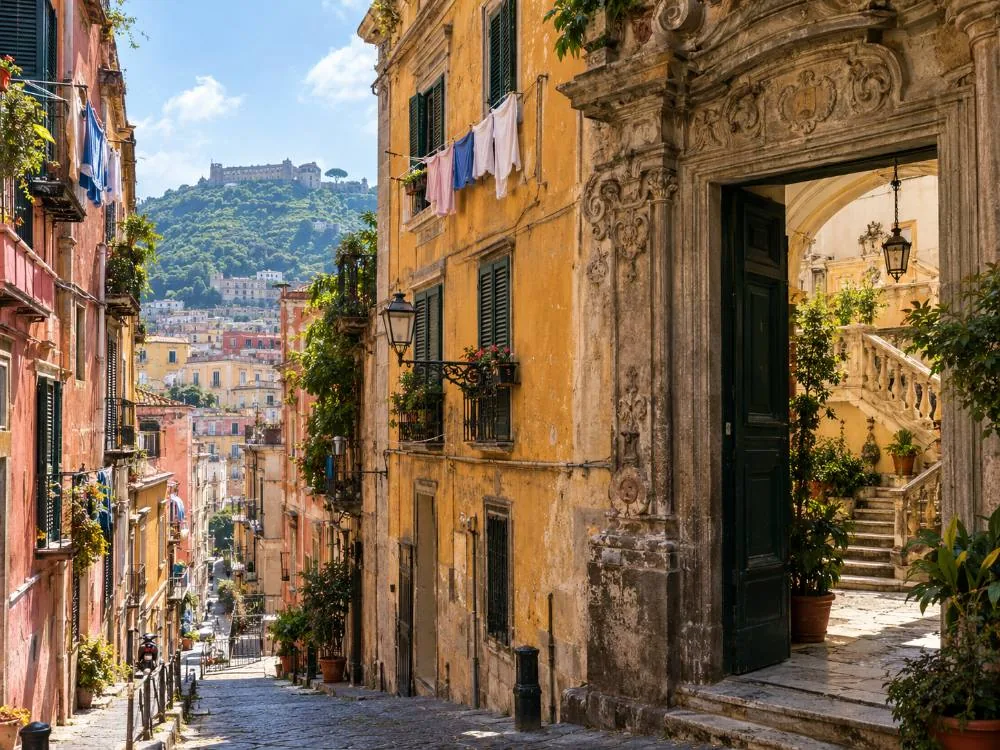
The hill at the base of the Capodimonte ascent is made of tuff, a soft rock that can be cut with simple tools and then holds firm on its own, without supports. Above it, there was already a burial area: the district we now call Rione Sanità lay outside the Greek and Roman walls, and that’s where people were buried. These two factors explain the choice. It’s no coincidence that the underground of this part of Naples is riddled with tunnels: those who dug were looking for building stone and found space to fill.
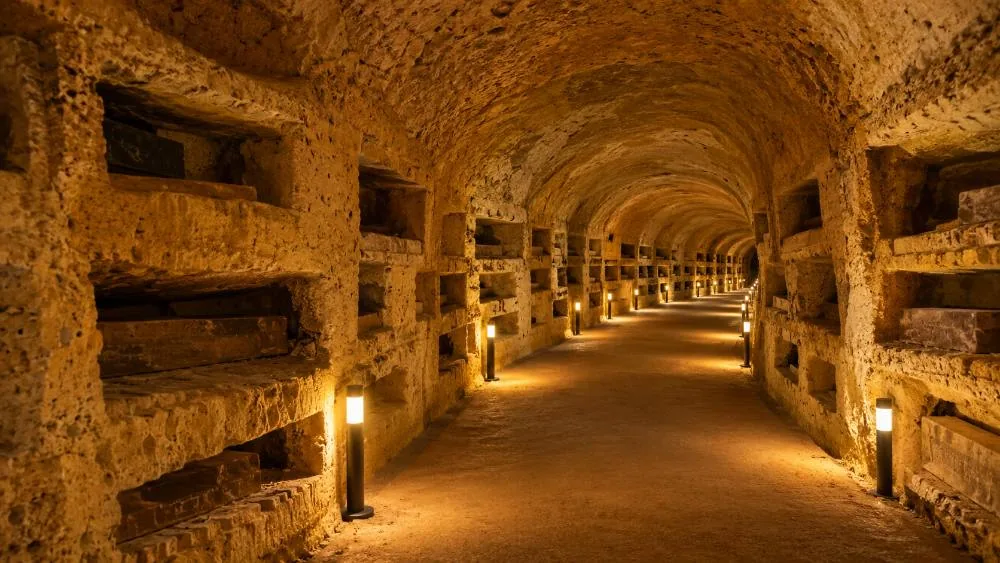
Two levels, not one
The complex spans two connected levels, which surprises those expecting a narrow corridor. The galleries are wide, and the route is mostly flat, covering about half a kilometre. On the upper level, you’ll find the Crypt of the Bishops, an underground basilica with three naves carved into the rock, and the mosaics, including that of San Quodvultdeus. You then descend to the lower level, where the Basilica of Sant’Agrippino is located, with its bishop’s throne carved into the wall and the baptismal font: two features that clearly show this wasn’t just a burial site, but a place of gathering. The frescoes date from the 2nd to the 10th century, layered in the same space. The room-by-room details are in what you see underground.
From cemetery to sanctuary
Until a certain point, this was a Christian cemetery like any other. Then, in the 5th century, the body of San Gennaro—Bishop of Benevento, beheaded in Pozzuoli at the start of the 4th century during Diocletian’s persecutions—was brought here. From that moment, the cemetery became Naples’ great Christian sanctuary, and everything else grew around the tomb. I’ll add a clarification that’s almost a daily necessity at the ticket desk: the vials with the blood aren’t here; they’re in the Duomo, in the Chapel of the Treasury of San Gennaro. The tomb was here. Those who want the saint’s story can find it in who San Gennaro was, and those who want the site’s history in the history of the catacombs.
Why you can’t enter alone
There’s no free entry. You can only enter with a guided tour, departures are at fixed times, booking is mandatory, and the site is closed on Wednesdays, as well as on 25 December. On other days, visits run from 10:00 to 17:00, with the last entry at 17:00 and the ticket office opening at 9:30. You must arrive 15 minutes before your booked slot: the ticket is valid for that date and time only, and those who arrive after the departure won’t be moved to the next slot. Tours are in Italian and English, lasting 45–50 minutes according to GetYourGuide and about an hour according to the official site. Photography isn’t allowed inside, as the site is a protected heritage asset. The most common mistake I see is people turning up late on a Wednesday afternoon: they walk up from Porta San Gennaro and find the gate locked. The full opening hours are in hours and tickets.
One ticket, two catacombs, twelve months
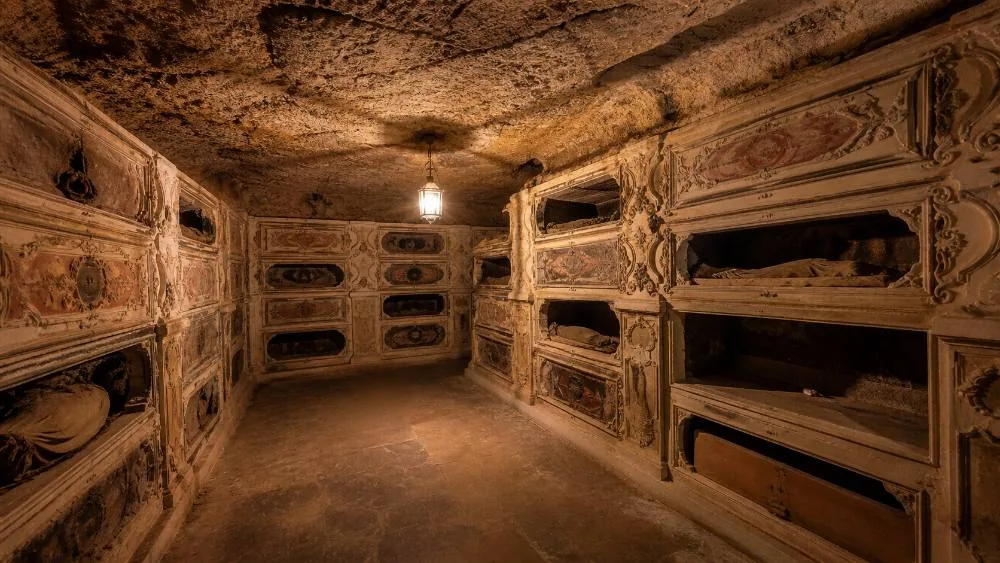
This is the part almost no one uses. Booking a visit to the Catacombs of San Gennaro also includes entry to the Catacombs of San Gaudioso, on the other side of the district, at Via della Sanità 123, beneath the Basilica of Santa Maria della Sanità, and remains valid for twelve months. The reverse is also true: those who book San Gaudioso can then enter here. San Gaudioso is smaller, with 5th–6th century frescoes and mosaics, and 17th-century noble burials with embedded skulls, and visitors report more intimate groups. In practice: if you’ve already visited one of the two, you have half an unused ticket in hand. A direct comparison is in San Gennaro or San Gaudioso.

La Paranza, and where the money goes
The catacombs are managed by the social cooperative La Paranza, founded in the neighborhood; the official website is catacombedinapoli.it and this is not it, as it is an independent guide. The Rione Sanità has long been cut off from the rest of the city and has a difficult reputation behind it: the reopening of the catacombs by the young people of La Paranza is what changed its economy. The Sacred Mile, the itinerary connecting the tomb of San Gennaro to his Treasure through the neighborhood, is the most direct way to see this effect above street level: a three-hour walk, with the hawk-wing staircases of Palazzo San Felice and Palazzo dello Spagnuolo along the way. It is also the most concrete reason to book the guided tour instead of skipping it: the ticket stays in the neighborhood. If you have the time, see the Sacred Mile; if you want to understand beforehand where you are stepping, the Rione Sanità.
Frequently asked questions
How long does the visit to the Catacombs of San Gennaro last?
The guided tour lasts 45–50 minutes according to GetYourGuide, while the official website mentions about an hour; it is best to allow a full hour, plus the 15 minutes in advance required at the meeting point. The covered route is about half a kilometer, almost entirely flat. The full breakdown is in how long the tour lasts.
How much does the catacombs ticket cost?
The updated amount appears in the booking box above, in availability, as it changes over time and we do not print it. What you pay for includes the guide, admission, and the second catacomb for twelve months, and a reduced ticket exists for certain age groups. What makes the amount go up or down is explained in ticket cost.
Where are the Catacombs of San Gennaro located?
At Via Capodimonte 13, in Naples, just above the Rione Sanità and at the base of the Capodimonte ascent. Buses 650, C63, 3M, 168, 178, and 204 stop at Basilica Incoronata, about 15 minutes from the center; by car, take the Capodimonte exit from the Tangenziale. Full directions in how to get there.
What can you see inside the catacombs?
Two connected levels carved into the tuff: above, the Crypt of the Bishops, the three-nave underground basilica, and the mosaics, including that of San Quodvultdeus; below, the Basilica of Sant’Agrippino, with the bishop’s throne carved into the rock and the baptismal font. The frescoes date from the 2nd to the 10th century. Step by step in what you see underground.
Which catacombs should you visit in Naples?
The underground options are four and are not interchangeable: San Gennaro for the wide galleries and two levels, San Gaudioso for the noble burials, the Ipogeo dei Cristallini for the Greek chambers, and the Underground Naples in the historic center, which is not a catacomb. Who chooses what, and why, in which catacombs to visit.
Is it worth it?
For most visitors, yes: 4.6 out of 8,718 reviews is a solid rating, the galleries are flat, and the ticket opens a second one. If you dislike large groups or expect a two-hour visit, some tours may disappoint. The detailed answer, including cases where it does not apply, is in is it worth it.
Can I enter without a guide?
No. Access is only with a guided tour at scheduled times, and booking is mandatory; the ticket office opens at 9:30, and those arriving after their tour has departed will not be admitted to the next one. The site remains closed on Wednesdays. Hours and rules in hours and tickets.
Is the ticket also valid for the Catacombs of San Gaudioso?
Yes, and for twelve months: the same booking grants access to the Catacombs of San Gaudioso, at Via della Sanità 123, beneath the Basilica of Santa Maria della Sanità. It also works the other way around, starting from San Gaudioso. The comparison between the two is in San Gennaro or San Gaudioso.
Do you still have a question? Write to us at [email protected]